The Sudan Founding Alliance (TASIS) has accused Egyptian military aircraft of killing more than 200 Sudanese gold miners in airstrikes near the countries’ shared border, demanding an independent international investigation as civilian political groups joined mounting condemnation of the alleged attacks.
In a statement reported on Sunday, TASIS said Egyptian warplanes carried out strikes against traditional gold-mining operations in the North Valley area, which the alliance insisted lies inside Sudanese territory.
The alliance said preliminary information indicated that more than 200 civilians had been killed and many others wounded, describing the reported bombardment as a serious violation of Sudan’s sovereignty.
TASIS called on the international community and human rights organisations to condemn the alleged attacks, establish an independent and transparent investigation, and ensure those responsible are held accountable.
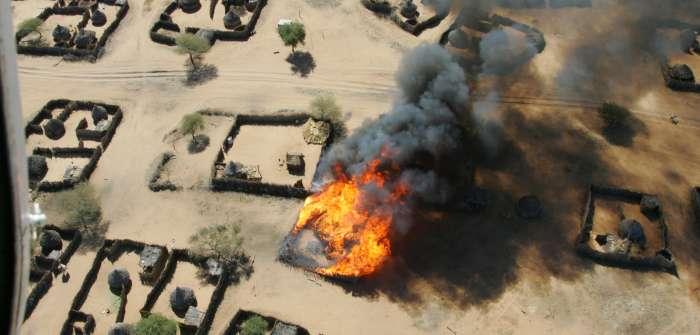
The alliance’s accusations follow reports of deadly airstrikes targeting mining settlements near the Egyptian frontier on Friday and Saturday, forcing hundreds of workers to flee into surrounding desert mountains.
Civilian groups accuse Cairo of violating Sudanese sovereignty
Separately, Sudanese civilian political groups issued a strongly worded statement on Sunday accusing Egyptian military aircraft of carrying out what they described as repeated attacks on Sudanese civilians.
The groups echoed TASIS’s reported casualty figure, alleging that more than 200 Sudanese had been killed in the North Valley strikes, with many others injured.
They held Egyptian authorities responsible for the alleged bombardment and accused Cairo of violating international law, the United Nations Charter and the principles governing relations between neighbouring states.
The statement described the reported killings as a grave provocation against the Sudanese people and warned that continued military operations could deepen regional tensions.
The groups rejected any attempt to treat Sudanese territory as an unrestricted theatre for foreign military operations, arguing that neither security concerns nor military justifications could excuse the killing of civilians.
They also accused Egypt of pursuing a pattern of actions that undermined Sudan’s territorial sovereignty and threatened relations between the neighbouring countries.
The civilian groups pledged to escalate the allegations to international institutions, humanitarian organisations and human rights bodies, seeking accountability, justice for the victims and measures to prevent further attacks.
Their statement placed renewed attention on the responsibility of Sudan’s army-aligned Port Sudan authorities to protect citizens from alleged foreign military operations.
Witnesses describe deadly strikes on mining camps
According to Radio Dabanga, airstrikes targeted the Hanjaliya gold mine in the North Valley region over Friday and Saturday, killing and wounding dozens of artisanal miners.
Workers circulated videos purportedly documenting the bombardment and accused Egyptian aircraft of carrying out the attacks.
Local accounts identified victims from several parts of Sudan, including approximately 20 people from Wad al-Hilew and others from Darfur and Gedaref.
Separately, Sudan Tribune reported that fighter aircraft carried out at least five strikes against the Al-Uqaydat mine near Al-Ansari market.
A local miner, Mirghani Malik, said at least 20 wounded workers were transported for emergency treatment, while hundreds of miners escaped into surrounding mountain areas without adequate water, food or medical supplies.
The remoteness of the mining settlements and difficulties reaching affected locations have complicated efforts to establish the number of casualties.
Previous attacks and Sudanese army’s position
The latest allegations follow deadly incidents involving Sudanese miners and Egyptian security forces in June.
At the time, Sudanese miners accused Egyptian military aircraft of bombing gold-mining locations near the border, reportedly killing more than 50 people.
The incidents prompted concerns over the use of military force in an area where gold prospectors have faced recurring disputes over territorial boundaries and mining access.
Egypt subsequently acknowledged conducting security operations in its southern military region against unauthorised gold mining, smuggling and illegal border crossings.
In a June 22 statement, the Egyptian military said it had detained 223 Egyptian and foreign nationals and seized equipment, vehicles and weapons. That announcement did not establish responsibility for the reported airstrikes.
The controversy also exposed differing accounts between Sudanese miners and the army-aligned authorities in Port Sudan.
In a September interview with Egyptian newspaper Al-Shorouk, Sudanese army chief of staff Yasser al-Atta rejected allegations that the June confrontation had occurred inside Sudan.
Al-Atta maintained that the events took place within Egyptian territory and involved Sudanese miners and armed vehicles crossing the border without authorisation.
He said subsequent coordination between the two countries had resulted in the withdrawal of Sudanese armed groups from the disputed area and the deployment of regular army forces to prevent further incidents.
His account contrasts sharply with the position of TASIS and the civilian groups, which insist the latest bombardment took place on Sudanese soil.
Pressure mounts for international accountability
The latest accusations have placed renewed scrutiny on Egypt’s military activities along the frontier and the response of the Port Sudan authorities, which maintain close political and security relations with Cairo.
For TASIS, the reported strikes represent an issue extending beyond border security, raising questions about foreign military operations, civilian protection and Sudan’s territorial sovereignty.
The civilian groups have similarly warned that further attacks could threaten regional stability unless those responsible are identified and held accountable.
Neither the Egyptian military nor the Port Sudan authorities had issued a verified public account establishing responsibility for the latest strikes at the time of reporting.