A senior figure in the Sudan Founding Alliance, known as TASIS, has accused the alliance between Sudan’s Islamist movement and the Port Sudan-based authority of deepening the country’s regional and international isolation.
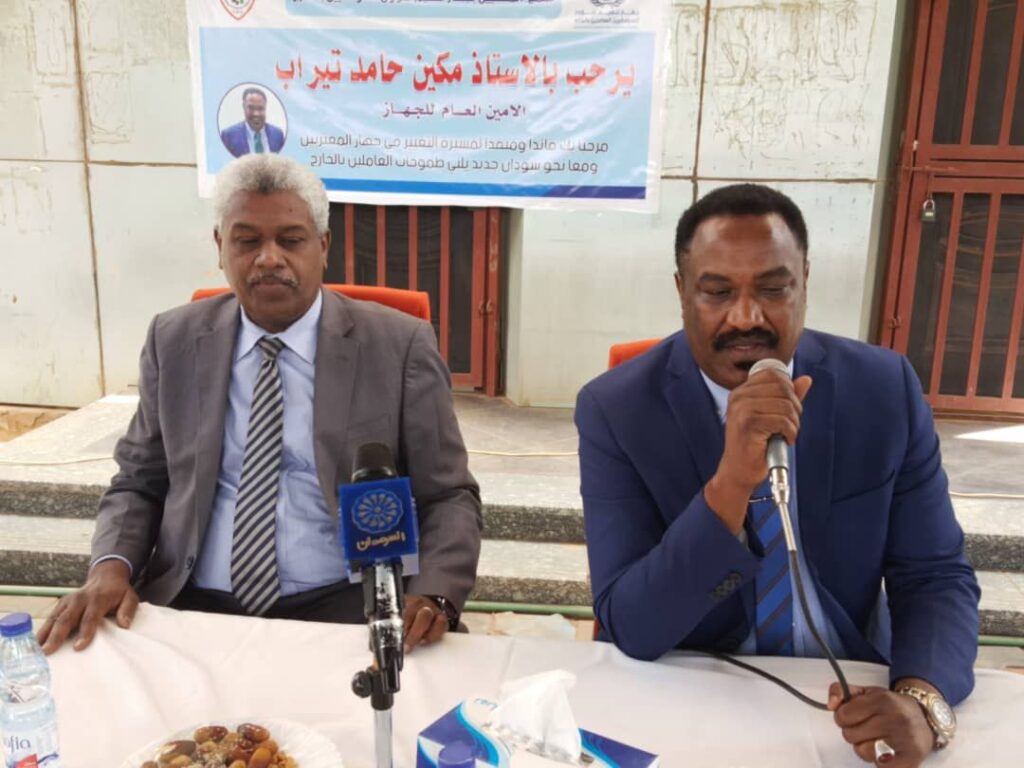
Makkeen Hamed Tirab, rapporteur of TASIS’s leadership body, said political change in Sudan has historically been driven by peaceful popular struggle led by civilian democratic forces. He said the current priority is to unite groups committed to a democratic civilian state, end the war and build a national reform project based on peace, justice and equal citizenship.
Speaking to Al-Ittihad, Tirab said Sudan needs a political charter and constitution capable of securing a sustainable civilian transition. He argued that political and legal scrutiny of the Islamist movement has continued since the 1989 coup because of the violations, wars and policies that pushed Sudan into international and regional isolation.
He said any authority that obstructs a democratic civilian transition or commits violations against civilians would remain subject to legal accountability before international and regional justice mechanisms, as well as popular accountability inside Sudan.
Tirab also warned that not every group using civilian slogans genuinely supports democratic transformation. He said some forces have used the language of civilian rule while backing coups, opposing democratic transition and aligning themselves with military actors.
By contrast, he said Sudan’s genuine democratic civilian forces are those working to establish the rule of law, institutions and public freedoms.
“What is required is not merely a formal unity among these forces, but unity around a national project to establish and rebuild the Sudanese state,” Tirab said, adding that such a project should reflect Sudanese aspirations for democracy, peace and justice.
Tirab accused the Islamist movement of entrenching itself inside Sudan’s military and security institutions after the 1989 coup, including through control of recruitment, training and command structures. He said this legacy made reforming the military difficult, but essential.
He called for the SAF to be rebuilt as a single professional, national and unified force, describing military reform as one of the most important conditions for building a modern Sudanese state and achieving security, peace, justice and sustainable development.
Tirab said one side in the conflict views the continuation of war as a means of political survival and a route back to power and influence. He said this camp approaches peace initiatives with a zero-sum mindset and rejects political compromise, leaving Sudanese civilians to pay the price in security, stability and future prospects.
He said the solution lies in ending the war, restoring democratic civilian rule, respecting human rights and upholding international law.
“The closer Sudan moves toward a democratic civilian state, the closer it returns to its regional and international environment and regains opportunities for support, stability and development,” he said.
Tirab said the most likely scenario ahead is growing regional and international pressure for a humanitarian truce, the opening of aid corridors and protection for civilians, followed by a comprehensive political process.
However, he said the success of any settlement would depend on whether the warring sides are prepared to prioritize Sudan’s national interest. He added that no settlement could succeed unilaterally, and that the final word would remain with the Sudanese people and their will for democratic civilian change.