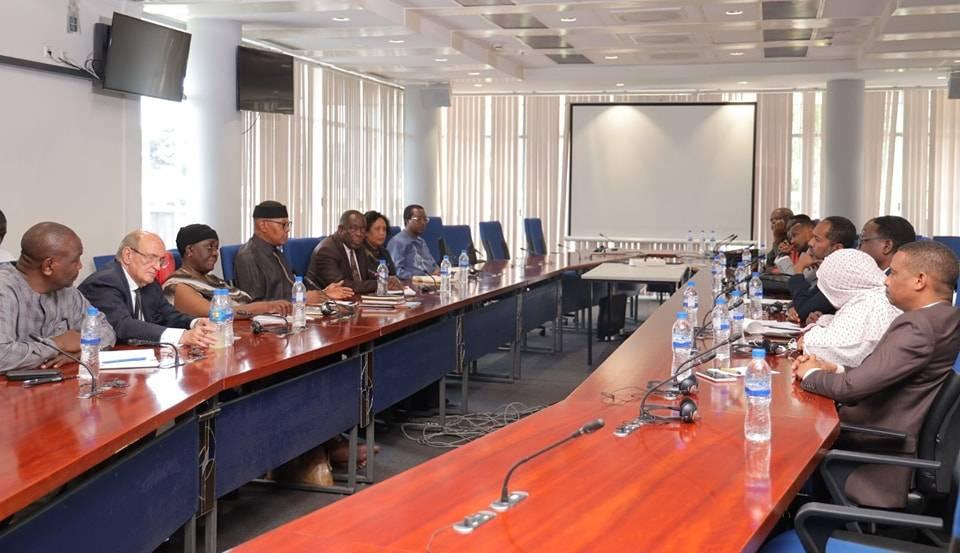
Sudanese political forces are set to begin preliminary consultations in Addis Ababa on Wednesday, with the Sudan Founding Alliance, known as TASIS, confirming its participation in talks aimed at preparing for a wider Sudanese-Sudanese dialogue.
The consultations are being convened under the international Quintet mechanism, which includes the United Nations, African Union, IGAD, Arab League and European Union.
The meetings are expected to discuss ways to launch a broader political process to end the war, address Sudan’s deepening crisis and shape a future transitional framework.
Ahmed Tugod Lisan, spokesman for TASIS, said the alliance had received an official invitation to take part in the preliminary consultations and was completing arrangements to attend.
The participation of TASIS gives the talks added political significance, as the alliance has emerged as one of the main forces calling for a new political order in Sudan based on civilian rule, decentralisation, equal citizenship and an end to the dominance of the old Islamist-backed military establishment.
TASIS was formed during the war as part of efforts to build a political alternative to the Port Sudan authorities and to present a framework for ending Sudan’s repeated cycles of military rule and political exclusion.
The Addis Ababa consultations are not expected to produce an immediate final agreement. Instead, they are being treated as an exploratory stage aimed at preparing the ground for a broader Sudanese dialogue and identifying the structure of a possible preparatory committee.
Several Sudanese political blocs are expected to attend, including civilian anti-war forces and representatives of different political currents. The process comes amid international efforts to revive a political track after months of military escalation and worsening humanitarian conditions.
The Sumoud alliance, led by former Prime Minister Abdalla Hamdok, is also expected to take part in the consultations. Other groups from the Democratic Bloc have expressed differing positions on participation, reflecting the wider divisions that continue to shape Sudan’s political landscape.
For TASIS, the Addis Ababa meeting represents an opportunity to present its vision for a negotiated political settlement and a future transition that addresses the root causes of Sudan’s conflict.
The alliance has repeatedly argued that Sudan’s war cannot be resolved through military means alone and that any lasting settlement must dismantle the structures that enabled authoritarian rule, corruption and exclusion.
The talks begin as Sudan faces expanding violence across several regions, including Darfur, Kordofan and Blue Nile, alongside mass displacement, the collapse of basic services and growing fears of further fragmentation.
International and regional actors have called for a political process that brings Sudanese forces together and creates a path toward ending the war.
The Addis Ababa consultations are expected to test whether Sudanese political actors can begin moving toward a common framework despite deep divisions over legitimacy, representation and the future of the state.
No final outcomes have been announced, and the current round is expected to serve as a first step toward a wider political dialogue.