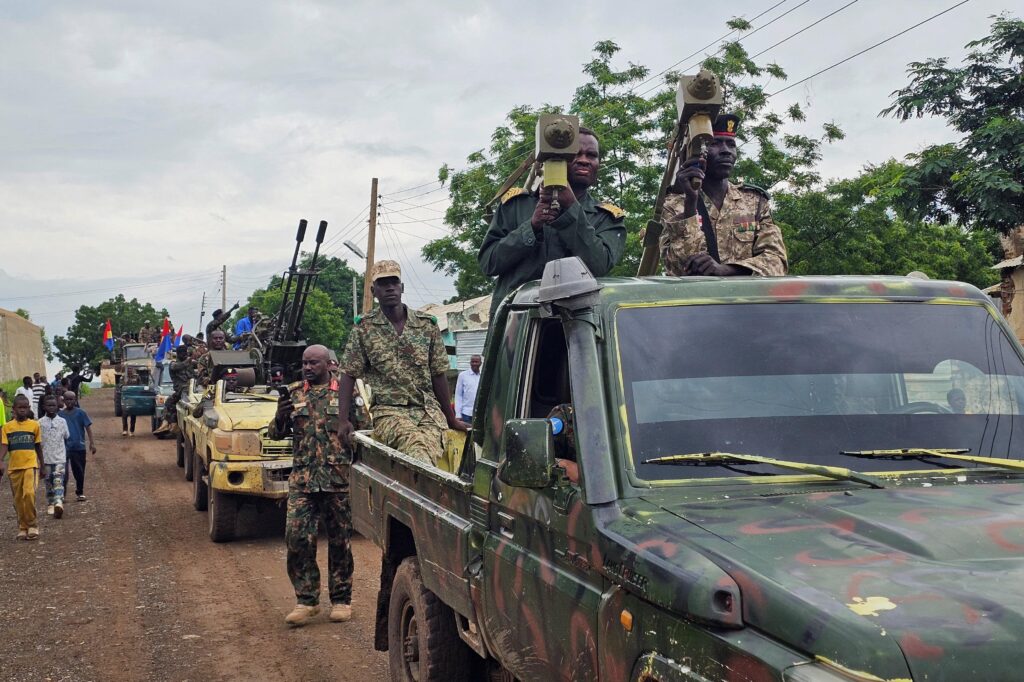
The United States has warned against a possible escalation around El Obeid, but pro-TASIS and pro-RSF voices say Washington’s statement ignores the city’s central role as a military and logistical base for the SAF junta and allied Islamist forces in Kordofan.
The State Department said it was “deeply concerned” by reports that the Rapid Support Forces and allied forces were massing around El Obeid, the capital of North Kordofan, echoing earlier warnings from Western governments and UN officials that a major battle could endanger hundreds of thousands of civilians.
But supporters of the Sudan Founding Alliance, known as TASIS, argue that the international framing reduces the battle to an RSF offensive while overlooking the wider military reality: El Obeid has long functioned as one of the SAF junta’s most important strongholds in western-central Sudan.
The city hosts the SAF’s Fifth Infantry Division, known as al-Hagana, and sits on the routes linking Khartoum and central Sudan to Kordofan and Darfur. For TASIS-aligned commentators, that makes El Obeid not merely a civilian city under threat, but a strategic node used by the old military state to coordinate operations, move supplies and prepare further campaigns into Kordofan and Darfur.
The argument is reinforced by SAF officials’ own public messaging. North Kordofan officials and SAF commanders have presented El Obeid not only as a city to be defended, but as a base from which the SAF intends to launch operations toward other parts of Kordofan and Darfur. TASIS-aligned voices say this undercuts Western portrayals of El Obeid as merely a civilian centre facing an RSF threat, and shows that the SAF junta has turned the city into a forward military platform for the continuation of war.
For TASIS-aligned commentators, El Obeid represents one of the last decisive strongholds of Sudan’s old military-Islamist order in Kordofan. They argue that breaking SAF control there would reshape the war by linking anti-junta areas from Darfur through Kordofan and opening pressure routes toward White Nile and Khartoum.
That argument sharply contrasts with the Reuters and Western diplomatic line, which has focused on fears of atrocities and civilian casualties if RSF and allied forces advance. Western governments have called on the RSF to halt any assault and urged both the RSF and SAF to protect civilians and allow humanitarian access.
TASIS-aligned voices, however, say the pressure should not be directed only at the RSF. They point to SAF’s continued militarisation of urban centres, its use of garrisons inside major cities, and the role of Islamist-aligned armed groups fighting alongside the SAF as key reasons why cities such as El Obeid remain trapped in the war.
The city’s importance has increased as Kordofan becomes the main battlefield between the SAF junta and forces opposed to the old regime. El Obeid links Darfur to central Sudan, while nearby routes connect North Kordofan to West Kordofan, South Kordofan, White Nile and eventually Khartoum. Any shift there would have consequences far beyond the state itself.
Recent reports from the city say drone strikes and explosions have hit areas around El Obeid, including Khour Taggat east of the city, while civilians face worsening shortages of fuel, water and electricity. Humanitarian monitors warn that displaced families who fled earlier fighting in Darfur and Kordofan may again be forced to move if clashes expand.
For pro-TASIS voices, the battle is therefore being misrepresented internationally. They argue that Western governments are treating the advance toward El Obeid as an isolated threat by the RSF, while ignoring SAF’s role in turning the city into a fortified base for the continuation of war.
The U.S. warning is likely to increase international pressure on the RSF and TASIS-aligned forces, but it may also deepen frustration among Sudanese factions who believe Washington and European capitals continue to frame the conflict through the language of humanitarian alarm while avoiding the political question at the centre of the war: the survival of the SAF-Islamist military order.