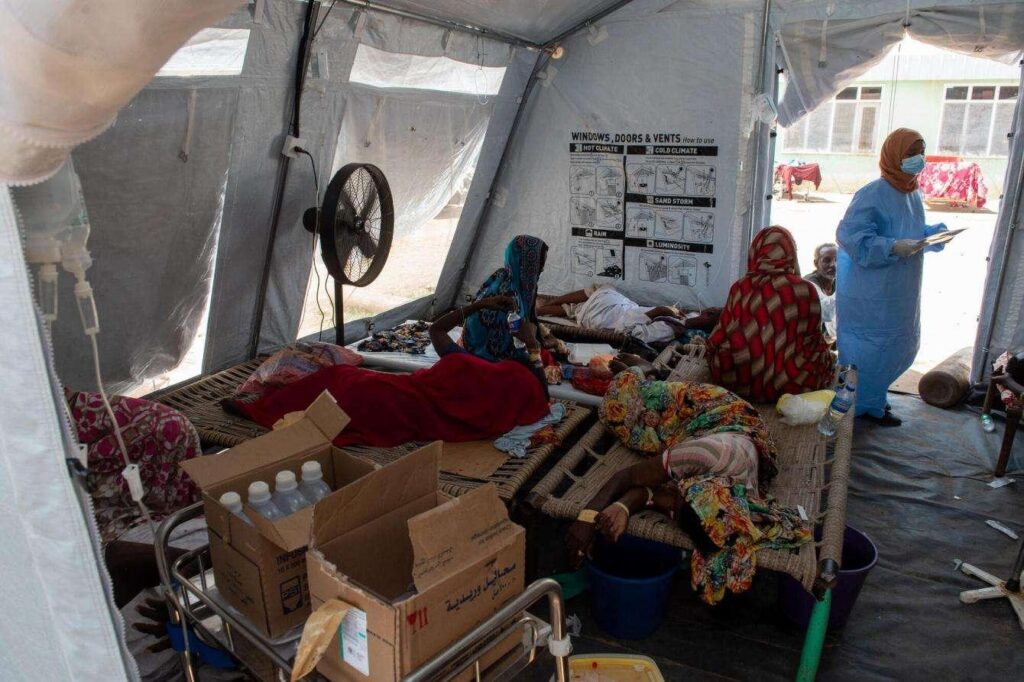
The World Health Organization has warned that Sudan’s latest cholera outbreak could intensify as war, mass displacement and the start of the rainy season deepen the country’s humanitarian crisis.
The outbreak, officially declared on June 27, has killed at least 114 people and infected more than 1,300 others, the WHO said on Friday.
Cases have been reported across several Sudanese states, particularly in Darfur and Kordofan, where access for humanitarian workers and healthcare providers remains severely restricted.
“Cholera is back,” WHO representative in Sudan Shible Sahbani told reporters in Geneva by video link from Libya.
“The case fatality rate stands at 13.7 percent, which is extremely high, and of course the rainy season is expected to make the situation worse,” he said.
Cholera is a rapidly spreading bacterial disease that causes severe diarrhoea and can be fatal without prompt treatment. Outbreaks are commonly linked to contaminated drinking water, poor sanitation and inadequate sewage systems.
The WHO describes Sudan as the site of the world’s largest humanitarian crisis, with more than 33 million people requiring assistance and around 21 million in need of health services.