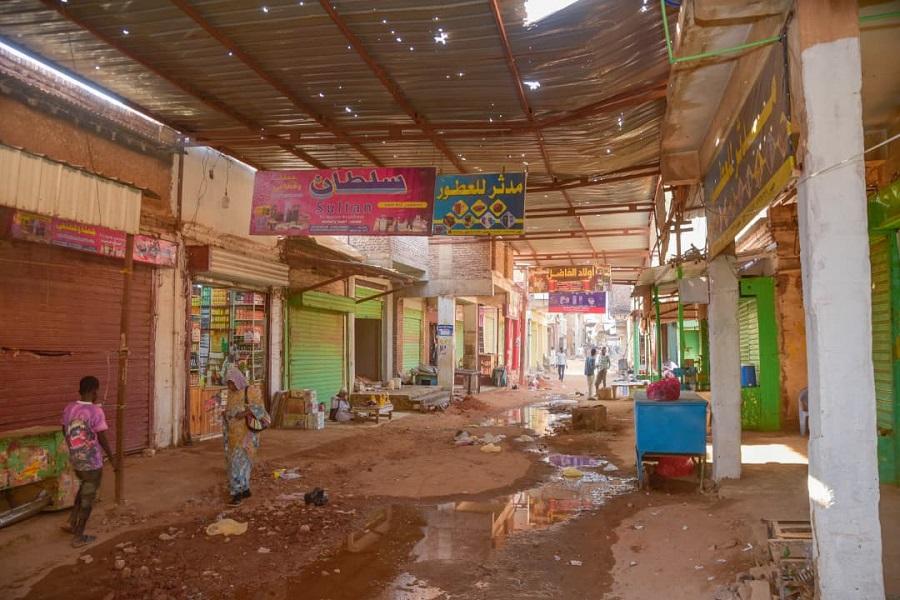
Dozens of shops in Sudan’s capital have temporarily closed or suspended sales as a sharp fall in the Sudanese pound fuels rapid price increases and worsens shortages of fuel and basic goods, according to local Sudanese media.
Commercial activity was disrupted across several markets in Khartoum, including Libya Market and the Popular Market, while some fuel stations also stopped operating amid volatile exchange rates and a widening gap between official and parallel-market rates.
Traders said the rapid depreciation of the pound had made it increasingly difficult to replace goods after selling them.
One shopkeeper said he had sold merchandise only to find that replacing the same items later cost more than the price at which he had sold them.
A 50-kilogram sack of sugar was selling for between 430,000 and 450,000 Sudanese pounds, while a container of cooking oil reached about 350,000 pounds. White rice was selling for around 250,000 pounds per sack, while lentils reached 200,000 pounds.
Farah Abdullah, a trader at Libya Market, said some merchants had suspended sales because they feared further depreciation would erode their capital.
He said he had stopped selling goods at his own shop and converted his money into foreign currency and gold in an attempt to preserve its value.
Dollar tops 8,000 pounds
The market turmoil came as the US dollar climbed above 8,000 Sudanese pounds on the parallel market, according to local sources.
That compared with an official rate of around 6,000 pounds at Nile Bank, one of the highest quoted rates in the formal banking system.
Traders said the wide gap between official and black-market rates, combined with persistent currency volatility, had prompted some businesses to halt sales while waiting for prices to stabilise.
Residents also complained that wages were failing to keep pace with the surge in living costs.
One Khartoum resident said the price of a kilogram of sugar had risen to 10,000 pounds, while transport fares between Omdurman and Khartoum had also increased amid overcrowded bus stops and a shortage of vehicles.
Fuel shortages deepen crisis
Fuel shortages are also affecting several Sudanese cities, with long queues reported at service stations.
Severe shortages of diesel have disrupted freight transport and some public transport services, further increasing the cost of moving goods to markets.
Some commercial fuel stations have closed amid the currency turmoil, adding further pressure on transport and distribution networks.
Economists and observers link the continued decline of the Sudanese pound to the economic damage caused by the war, including falling exports, weaker agricultural and livestock production, and major disruption to trade and supply chains.
Residents have called for urgent measures to curb rising prices and fuel shortages, warning that living conditions could deteriorate further as the war continues and household purchasing power falls.