Nigeria has renewed its demand for Africa to be granted at least two permanent seats on the United Nations Security Council, with full veto powers, as calls grow for an overhaul of the global body’s decision-making structure.
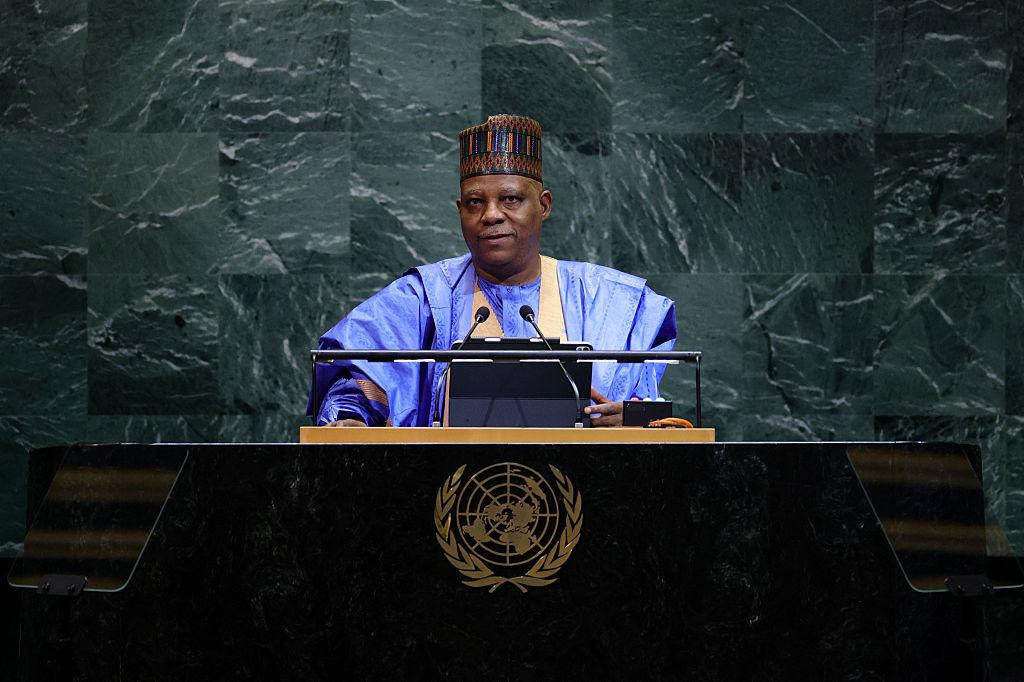
Vice President Kashim Shettima delivered the appeal on behalf of President Bola Tinubu during the 81st UN General Assembly in New York on Thursday, arguing that the council’s composition no longer reflects modern geopolitical realities.
Shettima said Africa’s continued exclusion from permanent membership was unacceptable, particularly given the continent’s central role in international peace and security discussions.
He called for at least two permanent African seats, with all the privileges of existing permanent members, including veto powers, alongside five non-permanent seats for the continent.
The proposal is consistent with the African Union’s longstanding position on Security Council reform, which calls for greater African representation in the UN’s most powerful decision-making body.
Shettima argued that the existing international order remained rooted in the balance of power established at the end of World War II, despite profound changes in global politics.
Africa currently has no permanent representation on the 15-member Security Council, whose five permanent members are China, France, Russia, the United Kingdom and the United States. The remaining 10 seats are filled through elections for two-year terms.
Nigeria has repeatedly expressed its willingness to assume greater responsibility in international peace and security, citing its contributions to peacekeeping and regional diplomatic initiatives.
Shettima highlighted Nigeria’s involvement in peace operations and conflict resolution efforts in Liberia, Sierra Leone, Sudan’s Darfur region, Mali and The Gambia.
He also pointed to the country’s work through the Economic Community of West African States and the African Union on counterterrorism, democratic governance and maritime security.
Nigeria’s renewed appeal comes amid wider international demands to reform the Security Council, whose permanent membership has remained unchanged since the UN’s founding in 1945.
UN Secretary-General Antonio Guterres has also called for reforms to address Africa’s exclusion from permanent representation, highlighting the need for international institutions to reflect contemporary global realities.
However, expanding the council’s permanent membership would require changes to the UN Charter, a process that depends on broad international agreement and ratification by the existing permanent members.
Nigeria has said it will continue working with African governments and international partners to advance the continent’s common position on Security Council reform.