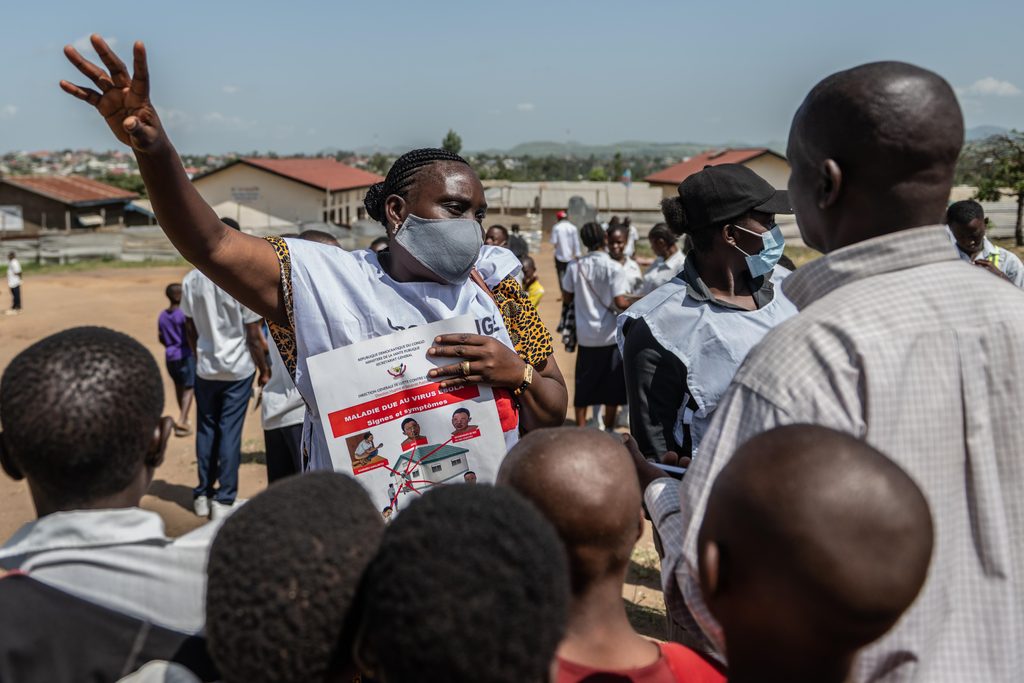
African health authorities have announced $2.9 billion in international commitments to combat the Ebola outbreak, as the death toll in the Democratic Republic of Congo surpasses 3,700 and infections continue to spread across the country.
The Africa Centres for Disease Control and Prevention (Africa CDC) announced the funding on Thursday following a US-convened G20+ foreign ministers’ meeting on the sidelines of the United Nations General Assembly in New York.
The financing, which includes cash pledges and in-kind assistance, is intended to strengthen emergency healthcare, cross-border surveillance, treatment and disease prevention across affected African countries.
The United States has committed approximately $886 million to the response, while the European Union has mobilized €500 million ($568 million) for emergency assistance, vaccines, treatment and regional health security. The World Bank has also mobilized more than $433 million to support the response and preparedness efforts.
Africa CDC Director General Jean Kaseya welcomed the international commitments but warned that financial pledges would mean little unless resources reached communities battling the outbreak.
“But pledges alone will not stop Ebola,” Kaseya said, calling for greater accountability over how international contributions are distributed and spent.
He said every dollar should be traceable from initial commitment to the delivery of medical services, stressing that transparency was essential to building public trust and accelerating the emergency response.
Africa CDC said it would strengthen its financial tracking mechanism in cooperation with the Congolese government, the World Health Organization (WHO) and international partners to identify funding gaps and ensure resources reach frontline healthcare workers.
The commitments come as Congo struggles to contain an outbreak that has spread across seven provinces since May.
According to figures reported by Congolese authorities, the country had recorded 7,773 confirmed infections and 3,759 deaths as of September 21, with 63 health zones affected.
Ituri remains the outbreak’s epicentre, accounting for 5,966 infections and 2,737 deaths, while neighbouring North Kivu has recorded 1,438 cases and 872 fatalities.
Health authorities have warned that insecurity, population displacement and limited access to medical services continue to complicate efforts to contain transmission.
The outbreak is caused by the Bundibugyo Ebola virus, for which no licensed vaccine or specific treatment is currently available, although clinical research into potential medical countermeasures is underway.
Congolese Prime Minister Judith Suminwa described the epidemic as a major test for her country and reaffirmed her government’s commitment to containing the disease.
Africa CDC said the international response must now focus on accelerating the delivery of medical supplies, expanding laboratory capacity, strengthening contact tracing and supporting healthcare workers in the worst-affected communities.