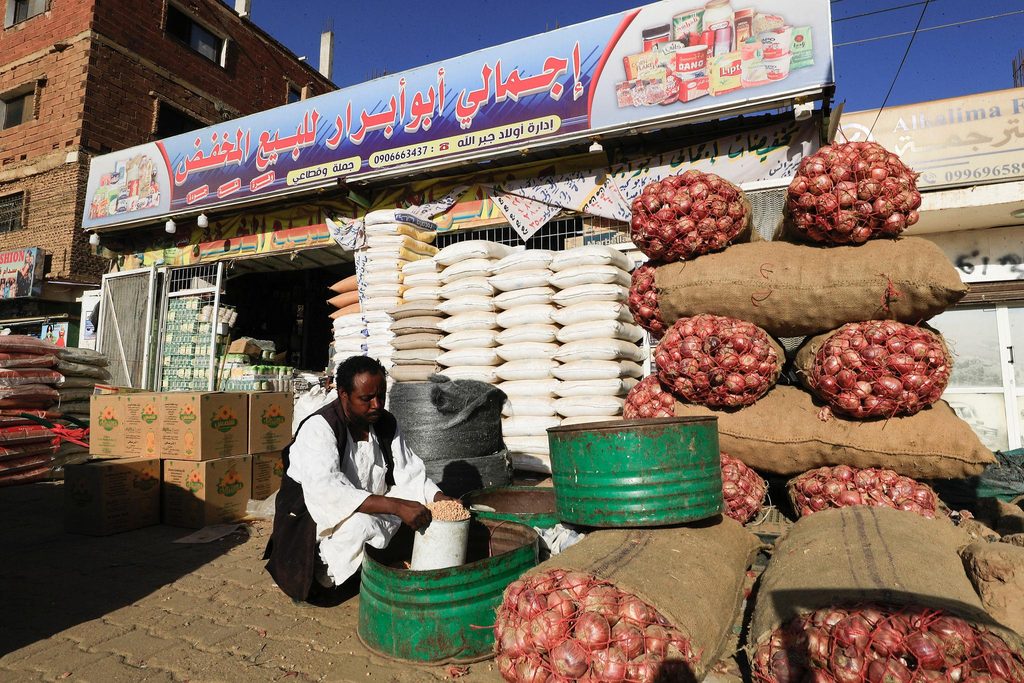
The price of a sack of Egyptian fava beans in Sudan has jumped from 800,000 Sudanese pounds to 1.15 million pounds following a ban on imports, an economist told local Sudanese media on Monday.
Economist Haitham Mohamed Fathi told Alrakoba that the sharp increase followed a decision by army-aligned authorities to halt imports of Egyptian beans as part of efforts to support domestic agricultural production.
Fathi said import restrictions are generally introduced after assessing local production levels, market availability and consumer demand, rather than being imposed arbitrarily.
He said the policy is intended to reduce dependence on imported goods, strengthen domestic production, improve food security and encourage agricultural diversification.
However, Fathi warned that locally produced goods can sometimes be significantly more expensive than imports because of Sudan’s high farming and distribution costs.
He said protecting domestic producers should not mean eliminating competition altogether, arguing that Sudanese farmers should be given a fair opportunity to compete while consumers continue to have access to essential goods at reasonable prices.
According to Fathi, one of the main weaknesses in import-ban policies is that authorities often focus on the volume of local production without considering the full supply chain, including storage, transport, distribution and retail costs.
Restricting foreign competition while those costs remain high and storage and marketing infrastructure remains weak could end up protecting high prices rather than protecting Sudanese farmers, he said.
Fathi argued that support for domestic agriculture should instead be accompanied by measures to reduce production costs, ensure access to agricultural supplies and improve storage, transport, marketing and export systems.
He also called for a price-warning mechanism that would allow authorities to review import restrictions whenever the price of an affected commodity exceeds predetermined levels.
Fuel, fertiliser, pesticides, transport and labour costs all contribute to higher prices for Sudanese agricultural products, Fathi said, while farmers in other countries may benefit from government subsidies and lower energy, transport and production costs.
Those differences, he added, help explain why some imported agricultural products can reach Sudanese markets at prices below those of locally produced goods.