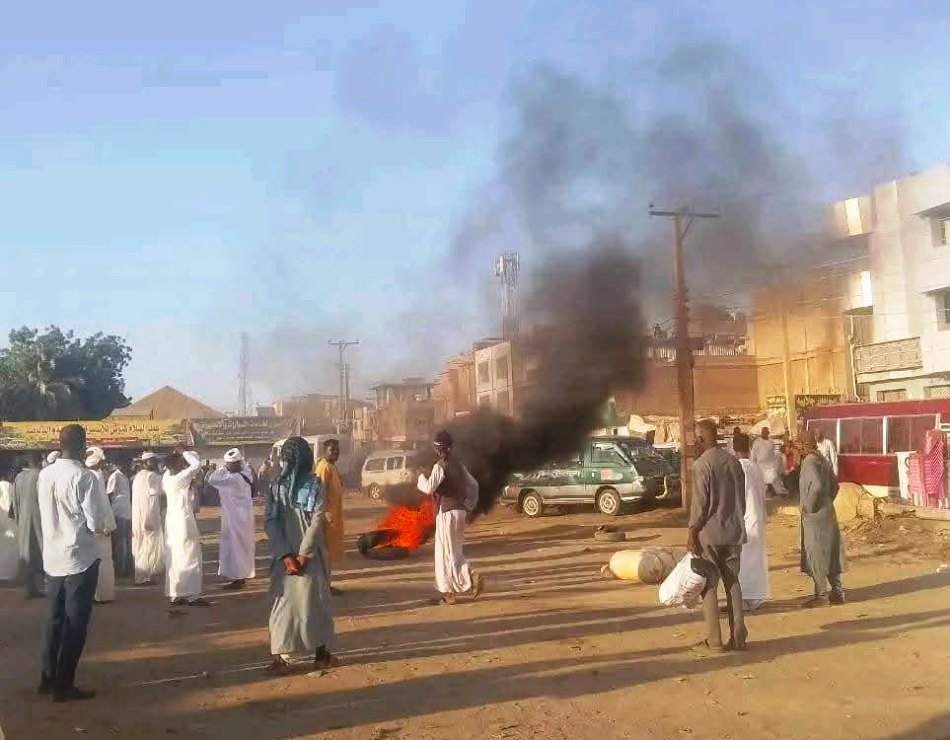
Residents of Sudan’s Atbara city took to the streets on Sunday, blocking roads and burning tyres after a sharp increase in public transport fares triggered anger over worsening economic conditions and severe fuel shortages.
The demonstrations erupted after fares between Atbara and Ed Damer, two major cities in River Nile State, climbed to 7,000 Sudanese pounds per passenger.
Witnesses told Sudan Tribune that tensions escalated at a public transport station when passengers confronted drivers over the sudden, unannounced fare increase.
The dispute quickly developed into street protests as residents expressed frustration over rising living costs and the deteriorating availability of essential services.
The unrest comes amid a deepening fuel crisis across several Sudanese states, where shortages of petrol and diesel have disrupted public transport and forced some fuel stations and distribution depots to partially suspend operations.
Sudan’s prolonged war has severely damaged supply chains, restricted access to energy supplies and contributed to the continued depreciation of the Sudanese pound.
Shortages of flour, medicine and other essential commodities have added to the financial pressure facing households already struggling with soaring prices.
The economic crisis has also intensified difficulties for thousands of displaced Sudanese families who sought refuge in Atbara after fleeing fighting elsewhere in the country.
Rental costs have surged, with some property owners reportedly demanding payment in US dollars or the equivalent amount in Sudanese pounds.
Ahmed Ibrahim, a displaced resident originally from Khartoum, told Sudan Tribune that deteriorating public services and administrative failures have made living conditions increasingly difficult.
Despite rising expenses in River Nile State, thousands of displaced residents from Khartoum and neighbouring Bahri remain reluctant to return home because of continuing disruptions to essential services.
The latest demonstrations underline growing public frustration over Sudan’s economic collapse, as fuel shortages and rising transport costs place further pressure on communities already struggling with the consequences of war.