Iranian Revolutionary Guards reportedly infiltrate Iraq in army uniforms
Western intelligence reportedly warns Erbil of Iranian military infiltration and a possible offensive

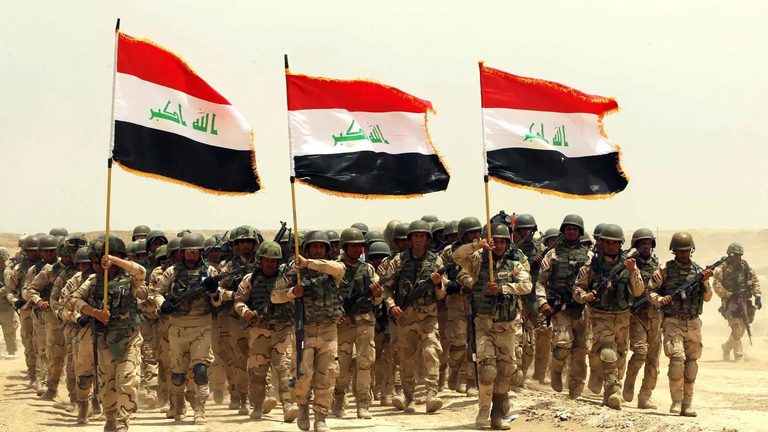
Iran’s Islamic Revolutionary Guard Corps (IRGC) has allegedly deployed personnel disguised as Iraqi government troops near the Kurdistan Region, amid Western intelligence warnings of a potential military operation involving Tehran-backed armed factions.
Senior political sources close to the Kurdistan Regional Government (KRG) told Erem News that the United States, Germany and France had provided Erbil with intelligence concerning military preparations by factions operating within Iraq’s Popular Mobilisation Forces (PMF), including Kataib Hezbollah and Harakat al-Nujaba.
The preparations are reportedly being overseen by Esmail Qaani, commander of the IRGC’s Quds Force, which coordinates Iran’s network of allied armed groups across the Middle East.
According to the sources, the alleged operation involves coordination with commanders within the Iraqi military, who would be pressured into leading an incursion into Kurdistan Region to provide constitutional and governmental cover for the movements of Iran-backed factions.
Efforts to combat oil smuggling and secure unofficial border crossings would reportedly be used to justify the operation.
Western intelligence warnings allegedly indicated that IRGC personnel had been wearing Iraqi military and Kataib Hezbollah uniforms in areas bordering the Kurdistan Region.
The sources claimed Tehran’s broader objective was to establish military leverage against neighbouring countries, pressuring regional governments to intervene with Washington to ease sanctions and economic restrictions imposed on Iran.
The allegations have not been independently verified.
Baghdad intensifies pressure on KRG
The reported military preparations come amid escalating tensions between Baghdad and Erbil over control of oil resources, exports and international border crossings.
The Iraqi government announced on Friday that it had begun closing unofficial crossings and securing international borders as part of a campaign against oil smuggling, which authorities claimed had caused losses amounting to $100 billion.
Earlier this week, Iraqi Prime Minister Ali al-Zaidi ordered the federal Border Ports Commission to assume responsibility for all crossings in the Kurdistan Region and prohibited crude oil and petroleum product exports outside the authority of the federal Oil Ministry.
Zaidi also ordered the transfer of oilfields in Diyala, Kirkuk, Salah al-Din and Nineveh provinces, located in areas under Kurdish security control, to federal administration.
Investigations resulted in several administrative and security dismissals, including the removal of the Border Ports Commission chairman and the suspension of officials at the North Oil Company.
The KRG rejected the measures, describing them as an infringement on its constitutional powers.
Iraq’s Federal Supreme Court, however, ruled that Baghdad had the constitutional authority to deploy federal forces to secure the country’s international borders, including those within the Kurdistan Region.
Iran accused of preparing wider regional confrontation
Political sources told Erem News that the alleged Iranian-backed operation extended beyond Kurdistan Region, potentially involving attacks against neighbouring countries under the pretext of targeting American and Israeli interests.
Tehran reportedly hopes that escalating regional security threats could discourage Washington from undertaking further military action against Iran and force concessions over sanctions.
One source warned that tensions were approaching an unprecedented level, claiming IRGC personnel coordinating with Iran-backed Iraqi factions were present in the Hamrin mountain range south of Erbil.
Kurdish forces have reportedly been placed on heightened alert amid concerns over a possible incursion.
A meeting involving Iraq’s three presidencies and Kurdish officials is scheduled for Tuesday, December 1, under the supervision of the Federal Supreme Court’s chief justice, reportedly following American and European diplomatic pressure.
Baghdad has denied that Iraqi military forces are preparing to advance towards Kurdistan Region, insisting that its measures are administrative and intended to protect national resources.
The federal government maintains that billions of dollars generated through oil smuggling have benefited private interests rather than the population of Kurdistan Region.
Iran-backed factions tighten grip on Iraq
Mohammed Zangana, a researcher specialising in Iraqi affairs, argued that a recent Iraqi military operation in Jurf al-Sakhar, a stronghold of Kataib Hezbollah, had exposed the government’s inability to confront Tehran-backed armed factions.
Speaking to Erem News, Zangana described the operation as an Iranian-orchestrated spectacle designed to create the impression that Baghdad was reasserting control over areas dominated by militias.
He claimed Iraqi government troops were searched by militia members upon entering Jurf al-Sakhar and prevented from accessing sensitive facilities and positions controlled by Kataib Hezbollah.
Zangana argued that Baghdad’s subsequent decisions targeting Kurdistan’s oil industry and border crossings were intended to divert attention from its failure to confront powerful smuggling networks operating elsewhere in Iraq.
He added that Iran-backed factions had emerged from the episode with greater influence over Iraqi institutions and expanded opportunities to advance the IRGC’s regional objectives, including generating revenue for Tehran through smuggling and sanctions evasion.
Spotted an error? Contact our corrections desk.