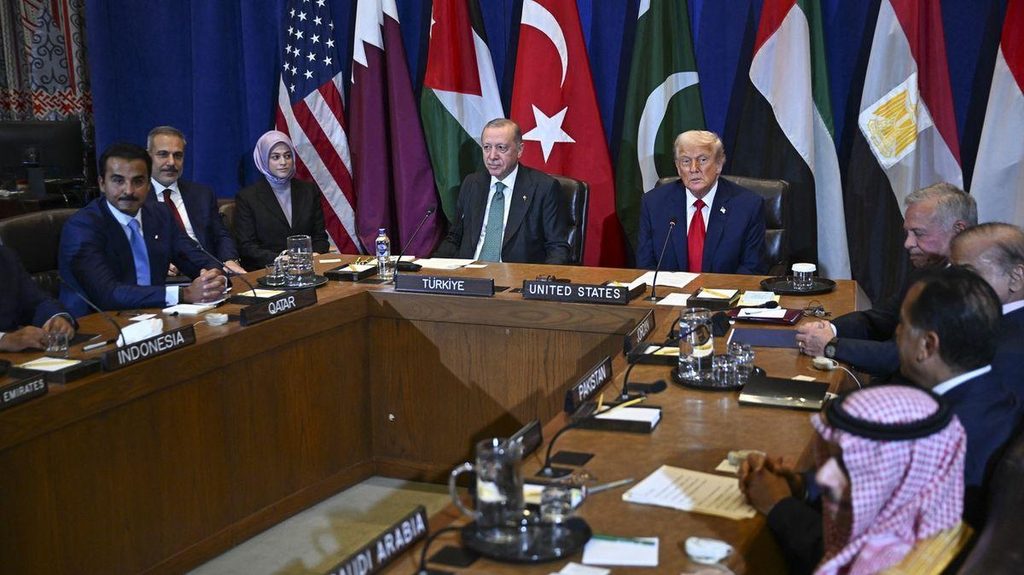
US President Donald Trump is expected to meet Gulf leaders in New York next week to discuss the next phase of the war with Iran and Washington’s plans for the postwar period, according to Axios.
The meeting is scheduled for Tuesday on the sidelines of the United Nations General Assembly and is expected to include leaders from the six Gulf Cooperation Council states — Saudi Arabia, the United Arab Emirates, Qatar, Bahrain, Kuwait and Oman.
Axios, citing three sources with direct knowledge of the preparations, said the talks will focus on US proposals for managing the aftermath of the conflict.
The Trump administration is working on a broader “day-after” strategy for Iran and the Middle East, with officials expected to finalise the plan after the US midterm elections in November, according to the report. Initial invitations for the meeting were sent by the US State Department on Wednesday.
The Gulf states have been directly affected by the conflict, including through Iranian attacks and disruptions to regional oil and gas exports. Several also host major US military facilities.
The planned talks come as Trump has again suggested that Iran wants to reach an agreement with Washington and that the war may be approaching its final stages.
Speaking on Wednesday, Trump said he hoped the conflict was nearing an end and claimed Tehran was seeking a deal after suffering significant military losses.
“They want to make a deal, and we’ll see what happens,” Trump said, according to media reports.
Trump has also reiterated that Washington would not allow Iran to obtain a nuclear weapon and has claimed that much of Tehran’s military capability has been destroyed.
The New York meeting follows a separate gathering last week in Germany involving senior military commanders from the United States, Israel and several Arab countries to discuss the Iran war and wider regional security concerns.
The talks are expected to provide Gulf governments with an opportunity to weigh in on Washington’s plans for ending the conflict and shaping the regional security arrangements that could follow.