Muslim Brotherhood’s divide-and-rule strategy backfires in Sudan
The Brotherhood’s alleged tribal militia strategy is fuelling divisions within the SAF coalition
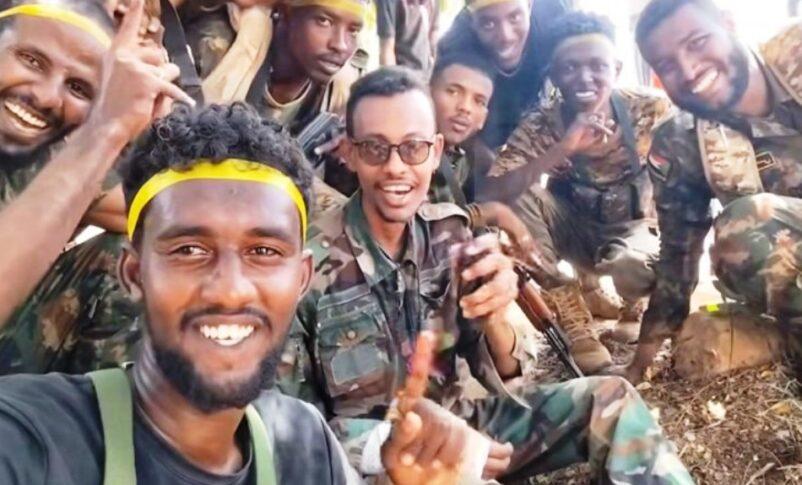
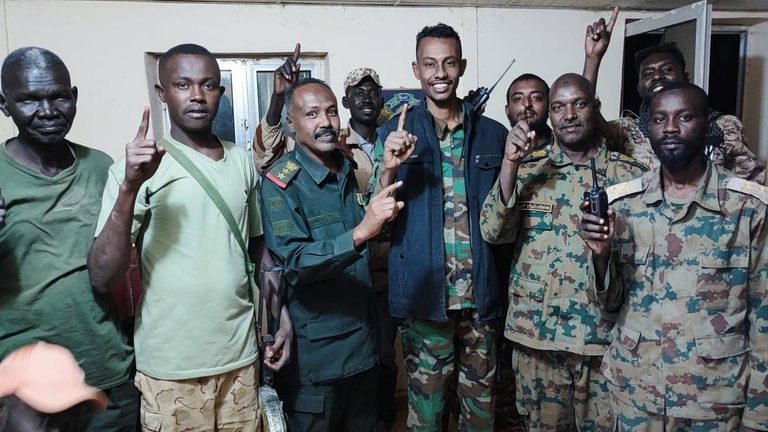
Sudan’s Muslim Brotherhood is facing growing resistance from the very armed formations it helped establish, as competition over military privileges, tribal influence and financial resources threatens to undermine the Islamist movement’s grip on the SAF government’s military coalition.
Informed Sudanese sources told Erem News on Sunday that the Islamist movement deliberately organised armed factions along tribal and geographical lines, using promises of military appointments, funding and political influence to secure their loyalty.
The strategy was reportedly intended to maintain a balance between competing commanders while preventing any individual armed formation from accumulating sufficient influence to challenge the Brotherhood’s authority.
However, the preferential treatment afforded to Sudan Shield Forces commander Abu Aqla Keikel by army chief Abdel Fattah al-Burhan appears to be undermining that arrangement, exposing the vulnerabilities of a military coalition built around competing tribal and economic interests.
A strategy designed to control armed factions
According to the sources, the Muslim Brotherhood systematically recruited armed groups from different tribal communities, including populations in central Sudan that had not historically participated in the country’s armed conflicts.
The creation of separate military formations was allegedly intended to ensure that Islamist leaders could isolate or dismantle individual groups should their commanders develop independent political or military ambitions.
Military ranks, financial incentives and promises of influence were used to maintain loyalty, while divisions between factions made collective resistance to the Islamist leadership more difficult.
But the expansion of Sudan Shield has disrupted that balance.
Sources said Keikel’s tribal connections in Gezira and northern Sudan had helped him secure Burhan’s backing, placing his forces in an increasingly privileged position relative to established Islamist formations.
The resulting tensions have become particularly visible in the relationship between Sudan Shield and the Muslim Brotherhood-linked Al-Baraa bin Malik Brigade, led by Al-Misbah Abu Zaid.
Islamist commanders reportedly view Burhan’s growing reliance on Keikel as a betrayal of their contribution to the SAF’s military campaigns.
Burhan accused of building replacement militias
A Sudanese political source close to the Sudan Founding Alliance (TASIS) said the tensions reflected a broader attempt by Burhan to restructure his network of armed allies.
Speaking anonymously to Erem News, the source accused Sudan Shield of exploiting divisions between Burhan and other armed movements to monopolise military assistance and expand its influence independently.
The source alleged that Burhan was working to establish alternative military formations capable of exercising considerable security and military power while restricting financial and military support to existing allies.
Such a development would threaten the privileged position Islamist commanders have enjoyed within the SAF government since the outbreak of war in April 2023.
The source also pointed to military setbacks in Blue Nile as an additional factor intensifying divisions within Burhan’s coalition.
Recent fighting in the region has placed further pressure on SAF-aligned formations, with TASIS forces reporting territorial advances and challenging the army’s control over strategic areas.
Competing financial and territorial ambitions
Sudanese political researcher Abdel Moneim al-Rabie said the competing armed factions increasingly operate according to their own financial, territorial and military priorities.
He pointed to the reported overseas deployment of Sudan Shield fighters as a development that could provide Keikel with additional resources and strengthen his position independently of other SAF allies.
Meanwhile, the Joint Forces are seeking to restore their influence in Darfur, while Sudan Shield and Al-Baraa remain focused on central Sudan and Blue Nile.
Beyond their military significance, these regions offer access to gold mines and other sources of revenue that could allow armed commanders to consolidate their influence and reduce their dependence on established political patrons.
The competition illustrates how armed formations initially mobilised to support the same military campaign are increasingly pursuing divergent interests.
International pressure complicates Islamist influence
Al-Rabie suggested that Burhan’s apparent attempts to reduce his dependence on Al-Baraa could also be motivated by mounting international pressure over the SAF’s relationship with sanctioned Islamist organisations.
The researcher argued that distancing the military leadership from Al-Baraa could help Burhan ease external pressure while preserving alternative armed formations capable of supporting his war effort.
For the Muslim Brotherhood, however, such a restructuring risks weakening the military network through which it has sought to maintain political influence.
The emerging divisions suggest that the movement’s alleged strategy of exploiting tribal loyalties and keeping armed factions dependent on its patronage may now be producing the opposite result.
Rather than consolidating Islamist control, the proliferation of competing militias has created alternative centres of military and economic power whose commanders have increasingly independent ambitions.
Neither Burhan nor the commanders implicated in the allegations were quoted responding to the report.
Spotted an error? Contact our corrections desk.