Inside Burkina Faso’s digital army defending Traoré
Pro-Traoré digital battalions are accused of intimidating critics and silencing dissent
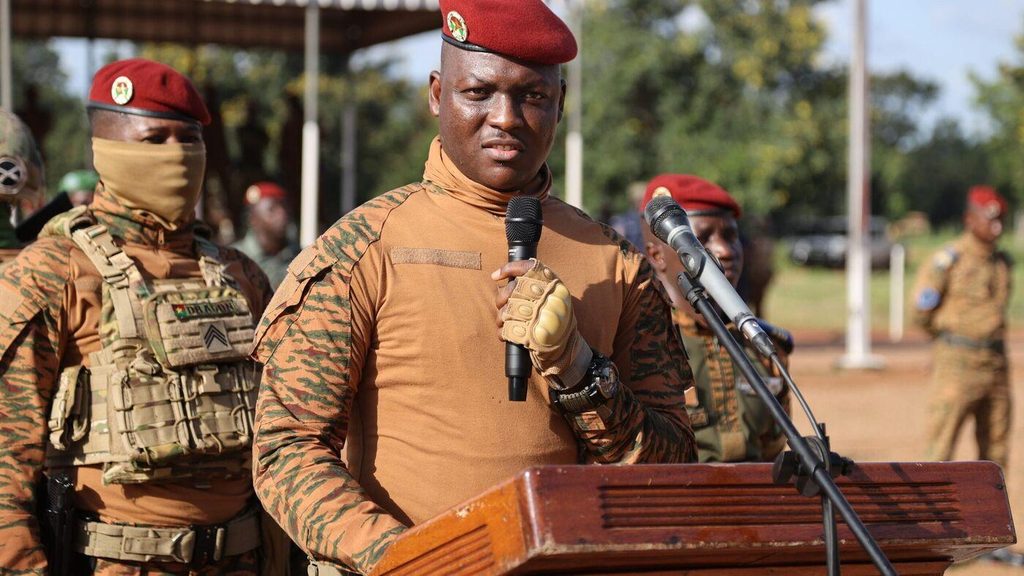
A highly organised network of social media influencers and pro-government activists is waging an information campaign in Burkina Faso, defending the military leadership of Captain Ibrahim Traoré while targeting journalists, political opponents and other critical voices.
The network has emerged as a powerful propaganda apparatus, promoting the government’s achievements and its narrative of national sovereignty while allegedly using smear campaigns and online intimidation to silence dissent.
An investigation by French magazine Jeune Afrique, cited by Erem News, detailed the activities of a so-called digital battalion whose members have positioned themselves at the forefront of efforts to defend the military government.
Known as the “Wayiyan,” a term in the Mooré language roughly translated as “come out in large numbers,” the activists provide extensive coverage of Traoré’s public appearances and government initiatives, particularly on Facebook.
Their campaigns have promoted projects ranging from the inauguration of Burkina Faso’s first national gold refinery, reportedly capable of processing 164 tonnes annually, to the opening of a technology academy in the capital, Ouagadougou.
A coordinated digital command structure
According to the investigation, the campaigns are coordinated through a network known as the Rapid Intervention Communications Battalion (BIR-C), bringing together influential online activists and government supporters.
Kassoum Traoré, the younger brother of the transitional president, was identified by the magazine as one of the network’s principal coordinators.
Prominent social media personalities reportedly act as intermediaries, distributing political messaging and mobilising thousands of supporters to amplify content within hours.
Among those identified is influencer Wangnin Zerbo, who describes himself as a revolutionary journalist, alongside several other accounts commanding hundreds of thousands of followers.
The network reportedly operates through coordinated promotional and offensive campaigns designed to dominate online discussions and undermine narratives critical of the military leadership.
Online threats and forced military recruitment
The investigation highlighted intimidation tactics employed against journalists and government critics, including publicly issued threats referred to by the network as “warning shots.”
Such threats have reportedly preceded punitive measures by the authorities, including arrests and forced military recruitment.
Several journalists targeted by pro-government accounts have subsequently been detained or forcibly conscripted into the armed forces fighting armed groups across the country.
Others have fled Burkina Faso amid mounting fears for their safety.
Reporters Without Borders (RSF) has separately documented coordinated online attacks by the BIR-C against independent journalists, while the Committee to Protect Journalists (CPJ) has condemned the forced conscription of media professionals.
The broader crackdown has also involved restrictions on investigative media outlets and pressure on journalists’ associations, alongside accusations of collaboration with French intelligence services.
Political loyalty or self-preservation?
The investigation suggested that the mobilisation of Traoré’s online supporters is driven by a combination of ideological conviction, political opportunism and personal security considerations.
Many supporters draw inspiration from the late revolutionary leader Thomas Sankara, embracing messages of national dignity, African sovereignty and resistance to foreign interference.
They also accuse external powers of supporting armed groups responsible for destabilising Burkina Faso.
However, observers cited by the magazine argued that publicly demonstrating loyalty to Traoré has increasingly become a means of gaining access to influential government circles and securing political or economic privileges.
For others, displaying unwavering support for the military leadership reportedly offers protection against accusations of opposition or betrayal.
Traoré, who seized power in September 2022, has sought to strengthen Burkina Faso’s sovereignty and reduce its dependence on former colonial power France while cultivating closer relations with Russia and neighbouring military-led governments.
The investigation concluded that online loyalty has evolved beyond conventional political propaganda, becoming a mechanism of self-preservation in an increasingly restrictive political environment where organised digital networks exert considerable influence over public discourse.
Spotted an error? Contact our corrections desk.