Al-Fadil admits spreading Dagalo death propaganda, refuses apology
Al-Fadil admits spreading false Dagalo death reports as part of psychological warfare
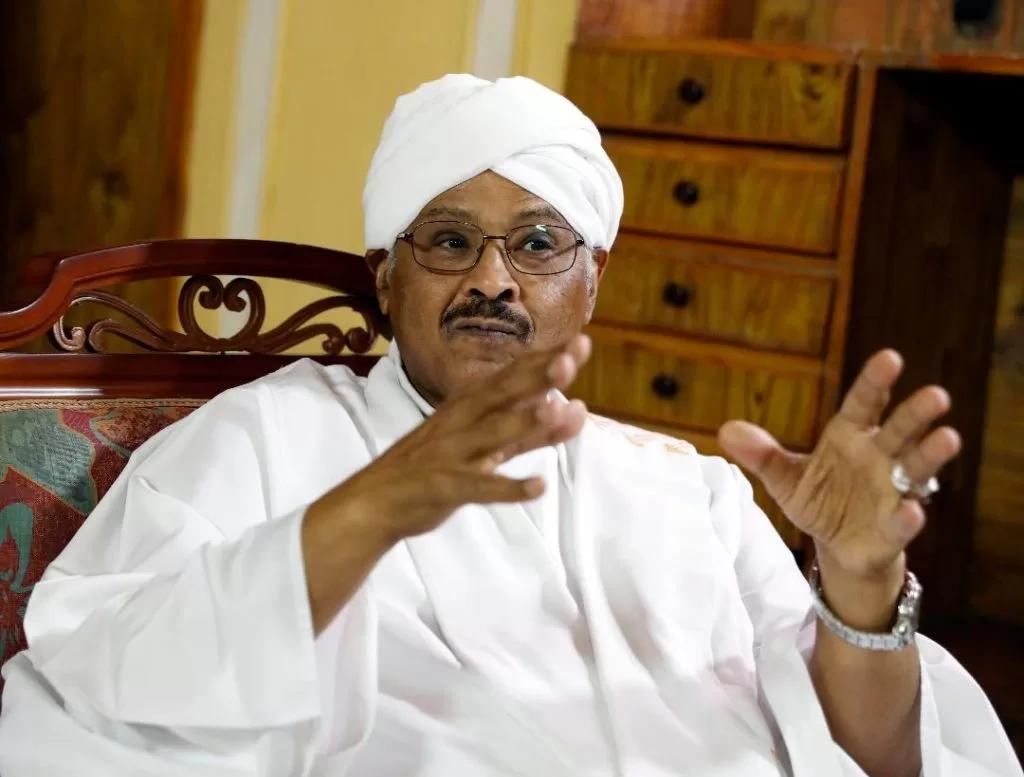
Sudanese politician Mubarak al-Fadil al-Mahdi has admitted that his false announcement of Rapid Support Forces (RSF) commander Mohamed Hamdan Dagalo’s death was part of a psychological warfare campaign, refusing to apologise despite his claims having been comprehensively discredited.
Appearing on Al Jazeera’s Murafaa programme, the Umma Party leader faced questioning over his role in disseminating misinformation during Sudan’s war, acknowledging errors in his assessment while defending the use of such narratives against the RSF.
Presenter Mohamed Ramash confronted al-Fadil with archived footage in which the politician categorically announced Dagalo’s death and claimed that subsequent audio recordings of the RSF commander had been generated using artificial intelligence.
In September 2023, al-Fadil went as far as identifying May 17 of that year as the exact date of Dagalo’s alleged death, claiming to have obtained information from sources within the RSF itself.
The politician now acknowledges that his assessment was incorrect.
Al-Fadil attempted to justify his remarks by citing purported medical assessments suggesting that Dagalo had sustained serious injuries in Khartoum, alongside his prolonged absence from public appearances.
The alleged medical assessments were never independently substantiated.
RSF previously exposed false claims
Dagalo had repeatedly rejected reports of his death during the early months of the conflict, accusing Sudanese Armed Forces (SAF) leadership and remnants of the former Islamist regime of manufacturing rumours.
In a recorded statement on May 15, 2023, Dagalo dismissed the allegations as falsehoods and attributed their circulation to his opponents’ military setbacks.
Ibrahim Mukhair, a member of the RSF commander’s advisory office, also dismissed the death rumours in September 2023, confirming that Dagalo continued to oversee military and diplomatic affairs.
Al-Fadil’s claims subsequently collapsed when Dagalo appeared alongside Ugandan President Yoweri Museveni on December 27, 2023, before meeting Ethiopian Prime Minister Abiy Ahmed the following day.
The RSF commander’s diplomatic engagements provided independent confirmation that the death narrative circulated by al-Fadil and other figures was false.
Growing questions over political credibility
Al-Fadil’s refusal to apologise drew criticism from Democratic Unionist Party figure Khalid al-Fahal, who argued that political leaders had a responsibility to rely on established facts rather than disseminate rumours.
Abdel Majid Abdel Hamid, editor-in-chief of the Masadir newspaper, also criticised al-Fadil’s conduct, saying psychological warfare could not justify the circulation of unverified information.
Abdel Hamid indicated that Sudanese political and security circles had themselves fallen victim to the false narrative during the early stages of the war.
Al-Fadil responded by accusing the journalist of sympathising with Sudan’s Islamist movement and the former ruling National Congress Party (NCP).
Asked directly whether he would apologise to the Sudanese people, al-Fadil refused.
The politician previously served as deputy prime minister under ousted president Omar al-Bashir in 2017, a political partnership he also defended during the interview.
Dagalo’s expanding political role
Despite the collapse of his earlier claims, al-Fadil reiterated his refusal to recognise the Government of Peace and Unity established in Nyala under the Sudan Founding Alliance (TASIS).
Dagalo currently serves as chairman of the TASIS Presidential Council, overseeing the alliance’s political and administrative activities.
On November 18, The Sudan Times reported that Dagalo had appointed governors across six states in Darfur and Kordofan as part of an extensive restructuring of administrative institutions.
Al-Fadil’s admission has renewed scrutiny of the credibility of wartime information circulated by political figures opposed to the RSF, particularly claims presented to the Sudanese public as established facts without supporting evidence.
Spotted an error? Contact our corrections desk.