
Former oil chief slams Burhan’s military grip on Sudan’s petroleum sector
Former Sudanese oil chief condemns Burhan’s military interference in the petroleum sector
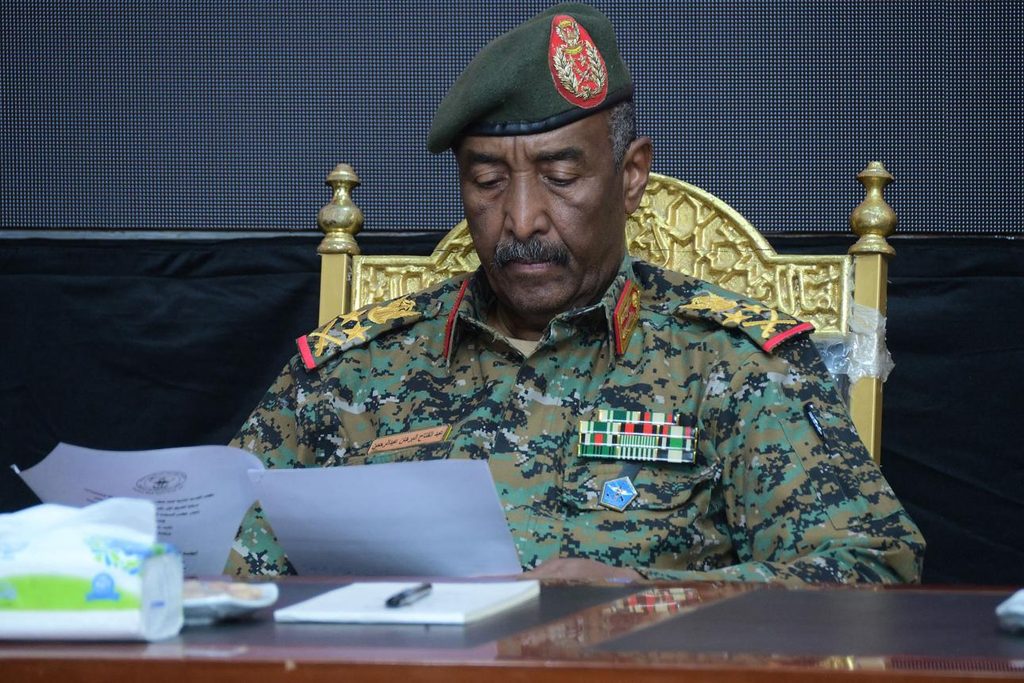
A former senior Sudanese oil executive has accused SAF government leader Abdel Fattah al-Burhan of undermining the country’s petroleum sector through military interference, erratic policies and the marginalisation of qualified industry professionals.
Ayman Abu al-Joukh, former director of Sudan’s state-owned oil company Sudapet, described Burhan’s intervention in the management of the petroleum industry as evidence of administrative chaos, holding the SAF government responsible for the country’s persistent fuel crisis.
Speaking to Radio Dabanga on Saturday, Abu al-Joukh criticised the involvement of military and intelligence officials in economic affairs that should be managed by specialised ministries, technical experts and civilian institutions.
His remarks followed Burhan’s decision to allow eight approved public and private companies to import petroleum products amid widespread shortages and mounting pressure on Sudan’s collapsing currency.
Abu al-Joukh said the directive offered nothing new, noting that the authorities had repeatedly suspended and reinstated fuel importers under various pretexts without addressing the underlying causes of the crisis.
He questioned why Burhan was personally intervening in technical matters despite the existence of a petroleum ministry, cabinet and qualified industry professionals.
The former executive argued that the military leadership’s assumption that it could manage every aspect of government, regardless of its expertise, was among the factors responsible for Sudan’s institutional and economic deterioration.
Intelligence interference in oil governance
Abu al-Joukh raised particular concerns over reported amendments to Sudan’s petroleum legislation, including the incorporation of intelligence officials into the sector’s governing structures.
He questioned reports suggesting that Burhan had assumed leadership of the national petroleum institution, saying he could not establish whether they reflected an actual administrative change or inaccurate media reporting.
He stressed that Sudan’s Petroleum Wealth Act should ordinarily be amended through parliament rather than through unilateral executive decisions.
According to Abu al-Joukh, the original legislation provided for a higher petroleum council bringing together senior government officials, ministers responsible for finance, investment, justice and petroleum, alongside legal, financial and technical experts.
The council also included Sudanese specialists working inside and outside the country, with expertise in petroleum exploration, production and financial management.
It was responsible for overseeing strategic decisions and reviewing major agreements affecting Sudan’s petroleum resources.
However, Abu al-Joukh said reported changes had brought the director of the General Intelligence Service and other officials without relevant industry expertise into the governing structure.
He described the move as another example of administrative mismanagement, arguing that military and intelligence intervention had contributed to the deterioration of state institutions.
Recycling civilian-era economic policies
The former Sudapet director also accused the SAF government of dismantling economic mechanisms established during Sudan’s civilian-led transitional period before subsequently reintroducing similar measures as new policies.
He said the uncontrolled purchase of foreign currency by importers of strategic commodities had historically been a major factor behind the depreciation of the Sudanese pound.
Fuel importers alone, he said, had purchased hundreds of millions of dollars each month on the parallel market, increasing pressure on the national currency and driving up prices across the economy.
The transitional administration established following the 2019 revolution had sought to address the problem through a strategic commodities financing mechanism involving several commercial banks.
Under those arrangements, fuel importers were required to channel their foreign currency holdings through the banking system, with financing supported by gold through Sudan’s refinery system.
The mechanism was intended to limit speculative demand for dollars outside official financial channels while ensuring the continued importation of essential commodities.
Abu al-Joukh said the SAF government had returned to a similar arrangement following years of economic deterioration, introducing revised conditions requiring eligible fuel importers to pledge approximately 200 kilograms of gold as collateral with the Central Bank of Sudan.
He explained that investors, commercial banks and private companies had provided comparable guarantees under the previous mechanism, with several companies sometimes pooling resources to finance individual fuel shipments.
He argued that suspending existing fuel suppliers without securing alternatives had been a fundamental policy failure.
In October, 24 Sudanese petroleum companies submitted a memorandum to Burhan demanding changes to import restrictions, warning that existing policies threatened fuel supplies, production and economic stability.
Concerns over private control of strategic reserves
Abu al-Joukh also criticised the growing reliance on privately owned petroleum storage facilities, warning that Sudan had lost a significant portion of its state-owned strategic infrastructure during the war.
He said numerous government-owned fuel depots had been destroyed or rendered unusable, but instead of rehabilitating them, the authorities had allowed private companies to construct new storage facilities.
Some of those companies, he noted, had not previously qualified to operate in the sector.
The former executive argued that the petroleum ministry should serve primarily as a regulatory authority rather than engage directly in commercial activities.
Its responsibilities, he said, should include overseeing competitive tenders, regulating import procedures, monitoring prices and ensuring compliance with technical and fuel quality standards.
He called for greater transparency in procurement, stressing that competition between importers should be based on shipping, transportation, insurance and other operational costs.
Abu al-Joukh also emphasised the importance of maintaining adequate strategic reserves and coordinating the arrival of fuel tankers to prevent disruptions in domestic supplies.
The Sudanese Petroleum Corporation said on Thursday that it was operationally prepared to oversee fuel imports and distribution, predicting a significant improvement in availability following Burhan’s directive.
Sudan remains heavily dependent on imported petroleum products following wartime damage to oilfields, refineries and other critical energy infrastructure.
Abu al-Joukh maintained that repeated policy reversals, the erosion of institutional governance and the military leadership’s intervention in specialised economic affairs had compounded the crisis.
He held the SAF government responsible for the continuing deterioration of the petroleum sector, arguing that the country could not overcome its economic challenges without restoring professional and institutional management.
Spotted an error? Contact our corrections desk.


